




Summarize this article:
 803 Learners
Last updated on December 1, 2025
Whole Numbers

A whole number is any natural number along with zero. It does not contain fractions, decimals, or negative numbers, and this type of number begins at 0 and continues to infinity. In this article, we will learn about whole numbers in detail.

What are Whole Numbers?
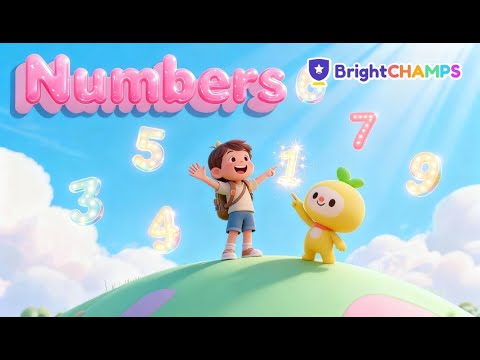
In our daily lives, we keep count of various things, such as age, quantities, and items. The counting numbers in mathematics are referred to as natural numbers. Zero and natural numbers are included in the collection of whole numbers. For instance, 0, 2, 77, and 9999 are some examples of whole numbers, and the set of whole numbers goes up to infinity. The capital letter ‘W’ is used to represent whole numbers.
Whole Numbers vs Natural Numbers
Understanding the differences between whole and natural numbers helps us distinguish between the two types of numbers and solve problems efficiently.
| Whole numbers | Natural numbers |
| The collection of numbers denoted as W, consists of {0, 1, 2,3, 4, ...}. | The set of numbers represented as N, includes {1, 2, 3, 4, ...}. |
| Zero is the smallest whole number. | 1 is the smallest natural number. |
| Every natural number is a whole number. | Except for 0, all natural numbers are whole numbers. |
Whole Numbers vs Integers
Whole numbers and integers are the two important sets of numbers we will often encounter in mathematics. The differences between these two sets of numbers are as follows:
| Feature | Whole number | Integers |
| Includes zero | Yes | Yes |
| Positive numbers | Yes | Yes |
| Negative numbers | No | Yes |
| Decimals/ Fractions | No | No |
| Set notation | {0, 1, 2, 3, ...} | {..., -3, -2, -1, 0, 1, 2, 3, …} |
Explore Our Programs


Whole Number Operations
Let us now understand how operations involving whole numbers work—understanding how addition, subtraction, multiplication, and division work among whole numbers is essential to deal with complex problems.
Addition: The process of putting together two or more numbers is known as addition. We perform addition to make a larger total. For example, \(9 + 4 =13.\)
Properties of addition
Commutative: \(a + b = b + a\)
Associative: \((a + b) + c = a + (b + c)\)
Identity element: \(a + 0 = a\)
Subtraction: Subtraction is the opposite action of addition. We use subtraction to find what is left when something is taken away from a whole.
Let us now see how to subtract fractions with whole numbers with the help of an example:
Subtract \(\frac{10}{4}\) by the whole number 2
\(\frac{10}{4} - 2 = \frac{10-8}{4} = \frac24 = \frac12\)
Multiplication: Multiplication is the process of adding the same number multiple times. Let us now see how to multiply fractions with whole numbers with the help of an example.
Find the product of \(\frac25\) times 8
Let us multiply fraction with whole number,
\(\frac25 \times 8 = \frac{(2\times 8)}{5} = \frac{16}{5}\)
Let us now learn how to multiply decimals by whole numbers, with the help of an example.
\(0.5\times 3 = \frac12\times 3 = 1.5\)
Properties of Multiplication
Commutative: \(a\times b = b\times a\)
Associative: \((a\times b)\times c = a\times (b\times c)\)
Identity element: \(a\times 1 = a\)
Zero property: \(a\times 0 = 0\)
Division: Division is the process of splitting a number into equal groups or parts. Let us now see how to divide fractions with whole numbers, with the help of an example.
Simplify \(\frac{12}{32}\)
Let us divide a fraction by a whole number,
\(\frac{12}{32} = \frac{\frac{12}{3}}{\frac{2}{1}} = \frac{12\times1}{3\times 2}= \frac{12}{6}=2\)
Now, let’s try dividing decimals by whole numbers.
Simplify \(\frac{0.5}{4}\)
We know that \(\frac12 = 0.5.\)
Therefore, \(\frac{0.5}{4} = \frac{\frac{1}{2}}{4}\)
\(= \frac{\frac{1}{2}}{\frac{4}{1}} = \frac42 = 2\)
Representing Whole Numbers on Number Line
Whole numbers can be represented visually using a number line. It is a horizontal line that includes all positive integers and zero, arranged in order. The starting point of the number line is zero, and it consists of whole numbers and natural numbers, as seen below:
Properties of Whole Numbers
Whole numbers are a fundamental aspect of mathematics, consisting of natural numbers along with zero. Understanding the key properties of whole numbers helps in solving complex mathematical problems and strengthens the foundation of arithmetic knowledge. The properties of whole numbers include:
- Closure property: When we add or multiply two whole numbers, the result is always a whole number. This means whole numbers are closed under addition and multiplication because these operations always give whole numbers. This property can be represented as follows:
If x and y are whole numbers, then \(x + y ∈ W\) and \(x × y ∈ W.\)
Here, W represents whole numbers.
For example, \(2 + 3 = 5,\) which is a whole number.
\(2 × 4 = 8,\) which is a whole number.
- Commutative property: When we switch the order of two whole numbers in addition or multiplication, the result remains the same regardless of the order.
The commutative property of addition is: \(x + y = y + x.\)
The commutative property of multiplication is: \(x × y = y × x.\)
For instance, \(3 + 1 = 1 + 3 = 4\)
\(4 × 3 = 3 × 4 = 12\)
- Additive identity: If we add a whole number with zero, the result is always the same whole number, i.e., \(x + 0 = x\)
For example, \(8 + 0 = 8\)
- Multiplicative identity: If we multiply a whole number by 1 the result is always the same whole number. It is represented as: \(x × 1 = x\)
For instance, \(4 × 1 = 4\)
- Associative property: If the grouping of three whole numbers is changed in addition or multiplication, the result stays the same. This is represented as:
\(x + (y + z) = (x + y) + z\) (associative property of addition).
\(x × (y × z) = (x × y) × z\) (associative property of multiplication).
For instance, \(1 + (5 + 2) = 1 + 7 = 8 \)
\((1 + 5) + 2 = 6 + 2 = 8\)
Likewise, \(1 × (5 × 2) = 1 × 10 = 10\)
\((1 × 5) × 2 = 5 × 2 = 10\)
- Distributive property: The multiplication of a whole number is distributed over the sum or difference of the whole numbers.
It is represented as: \(x × (y + z) = (x × y) + (x × z).\)
For example, take a look at this:
\(2 × (3 + 6) = 2 × 9 = 18\)
\((2 × 3) + (2 × 6) = 6 + 12 = 18\)
Thus, \(2 × (3 + 6) = (2 × 3) + (2 × 6)\)
- Multiplication by zero: If we multiply a whole number by zero, the result is always zero, i.e., \(a × 0 = 0.\)
For instance, \(14 × 0 = 0\)
- Division by zero: Division by zero is undefined. This is expressed as:
\(\frac a0\) is undefined.
Tips and Tricks to Master Whole Numbers
Whole numbers in math are one of the basic concepts that act as a base for many other concepts. Here are some tips and tricks to help learners master whole numbers.
- Teachers and parents should focus more on building a strong foundation of what whole numbers are, using real-life objects. We can use beans, blocks, toys, coins, etc., to make them understand the concept.
- Students can practice forward and backward counting, skip counting, and finding missing numbers using a number line. This would help in building an understanding of order, sequence, and magnitude.
- Parents should encourage their children to learn skip counting as a skill. Ask them to use rhythm, clapping, or walking to skip counting by 2s, 5s, 10s, etc. Help students understand the patterns that are helpful in multiplication, even/odd concepts, and place value.
- Teachers may ask mental questions during daily routines. Ask them, “What is 10 more than 20?” This method would help students become more flexible with numbers.
- Learners can create colorful, engaging hundred charts, place-value towers, dot grids, and ten-frames to easily grasp the idea of whole numbers.
- Parents can encourage their children to play games that involve counting numbers or number jumps. This helps in learning whole numbers with joy and excitement.

Common Mistakes and How to Avoid Them in Whole Numbers
Whole numbers are a set of numbers, including 0 and all natural numbers, and they do not have fractional or decimal parts. Students often make errors when they work with whole numbers, which lead to incorrect calculations and conclusions. Here are some common mistakes and solutions to help avoid these errors.
Mistake 1

Assuming that natural numbers are whole numbers

Students often get confused with whole numbers and natural numbers. Therefore, kids should clearly understand the differences between these two types of numbers to avoid confusion. Natural numbers begin from 1, whereas whole numbers start from 0 and include all positive integers.
Mistake 2
Incorrect multiplication of whole numbers
While multiplying whole numbers, students should consider the place values. If they forget to consider the place values, then the final result will be incorrect. When working with large numbers, try to break them into smaller ones to simplify the multiplication.
For example, some students mistakenly calculate \(13 × 4\) as 62.
The correct calculation is: \(13 × 4 = (10 × 4) + (3 × 4) \)
\(= 40 + 12 = 52.\) This is the correct answer.
Mistake 3
Dividing by zero
Sometimes, students mistakenly try to divide a whole number by zero. To avoid this error, they should learn that division by zero is undefined. No number can be divided by zero to give a whole number. It is represented as \(\frac{a}{0},\) which is undefined.
Mistake 4
Misinterpreting the closure property
Students think that when they subtract or divide two whole numbers, the result is always a whole number. They should understand that whole numbers are closed under addition and multiplication, not under subtraction and division.
For example, \(3 – 4 = –1\)
\(5 ÷ 2 = 2.5\)
Mistake 5
Forgetting the Identity elements
Students often forget the role of identity elements (0 and 1) in addition and multiplication. If they add zero with a whole number, the result will be the same whole number. Likewise, if a whole number is multiplied by 1, it gives the same whole number. For example, \(169 + 0 = 169\) and \(234 × 1 = 234.\)

Real-Life Applications of Whole Numbers
In our daily lives, we count objects and items like fruits, vehicles, people, and ages using whole numbers. Whole numbers are vital in various fields to indicate and represent counts. Whole numbers are widely applied in finance, construction, manufacturing, and population studies.
- Whole numbers are used in the fields of banking and finance to indicate deposit interest rates and withdrawal amounts of customers. It makes the transactions easy to understand, and it reduces confusion.
- In engineering and construction, whole numbers are used to represent the measured distance, area, volume, and time. For example, the distance between two cities might be 30 km, which is represented using whole numbers.
- Manufacturers and producers use whole numbers to keep track of the number of products available in stock or currently being produced.
- Whole numbers are used in demographic studies to represent the total population of a city or country. For example, the population of a country is recorded in a census.



Solved Examples of Whole Numbers


Problem 1
Identify the whole numbers among the following numbers: (-2, 0, 4,1/7, 6)

0, 4, and 6 are the whole numbers.
Explanation
In the given list of numbers:
-2 is a negative number, so it is not a whole number.
0 is included in the set of whole numbers, so it qualifies.
4 is a positive integer, and all positive integers are whole numbers, hence 4 is a whole number.
\(\frac{1}{7}\) is a fraction, and whole numbers cannot be fractions, so \(\frac{1}{7}\) is not a whole number.
6 is a positive integer, therefore 6 is a whole number.
The whole numbers in the list are 0, 4, and 6.

Problem 2
Identify the whole numbers among the following numbers: (1, -4, 9, 1/2, 0)
1, 9, and 0 are the whole numbers.
Explanation
In the given list,
1 is a positive integer, so it is a whole number.
-4 is a negative number, so it is not a whole number.
9 is a positive integer, therefore it is a whole number.
\(\frac{1}{2}\) is a fraction, hence it is not a whole number.
0 is a whole number because it is part of the set of whole numbers.
The whole numbers in the list are 1, 9, and 0.
Problem 3
Identify the whole numbers among the following numbers: (13, -24, 5, 7/2, 0)
13, 5, and 0 are the whole numbers.
Explanation
In the given list,
13 is a positive integer, so it is a whole number.
-24 is a negative number, so it is not a whole number.
5 is a positive integer, therefore it is a whole number.
\(\frac{7}{2}\) is a fraction, hence it is not a whole number.
0 is a whole number.
The whole numbers in the list are 13, 5, and 0.
Problem 4
Identify the whole numbers among the following numbers: (-6, 6, 0.5, 17, 12)
6, 17, and 12 are the whole numbers.
Explanation
In the given set of data,
-6 is a negative number, so it is not a whole number.
6 is a positive integer, therefore it is a whole number.
0.5 is a decimal number, hence it is not a whole number.
17 and 12 are positive integers, so they are whole numbers.
The whole numbers in the list are 6, 17, and 12.
Problem 5
Identify the whole numbers among the following numbers: (3, -8, 9, 0, -4)
3, 9, and 0 are the whole numbers.
Explanation
In the given list of numbers,
3 is a positive integer, so it is a whole number.
-8 is a negative number, hence it is not a whole number.
9 is a positive integer, therefore it is a whole number.
0 is a whole number.
-4 is a negative number, so it is not a whole number.
The whole numbers in the list are 3, 9, and 0.
Problem 6
Identify the whole numbers among the following numbers: (2, 0, -18, 5, 1/5)
2, 0, and 5 are the whole numbers.
Explanation
In the given list of numbers,
2 is a positive integer, so it is a whole number.
0 is a whole number.
-18 is a negative number, therefore it is not a whole number.
5 is a positive integer, hence it is a whole number.
\(\frac15\) is a fraction, so it is not a whole number.
The whole numbers in the list are 2, 0, and 5.

FAQs on Whole Numbers
1.Define whole numbers.

2.Is -2 a whole number?
3.Differentiate natural numbers and whole numbers.
4.What is the smallest whole number?
5.Are negative numbers whole numbers?

Hiralee Lalitkumar Makwana
About the Author
Hiralee Lalitkumar Makwana has almost two years of teaching experience. She is a number ninja as she loves numbers. Her interest in numbers can be seen in the way she cracks math puzzles and hidden patterns.
Fun Fact
: She loves to read number jokes and games.


